Confirming a technician’s credentials means checking their license, insurance, and certifications before scheduling any garage door service call. Skipping this verification step often means finding out too late that the person in the driveway has no real standing to do the job.
A polished company website or a confident sales pitch alone says nothing about whether a technician actually carries the paperwork to back it up. This guide breaks down what counts as a valid credential, the right questions to ask before hiring, and how to verify every claim independently.
Key Takeaways
- Check license numbers against the state database before confirming any appointment.
- Insurance and bonding protect the homeowner if damage or injury occurs during the job.
- Industry certifications from groups like the International Door Association signal real training and that the company meets skill requirements.
- Fake companies often use unmarked trucks, vague addresses, and pressure tactics to avoid scrutiny.
- A written estimate and clear warranty terms signal a legitimate garage door company.
Why Does Credential Verification Matter Before Hiring?
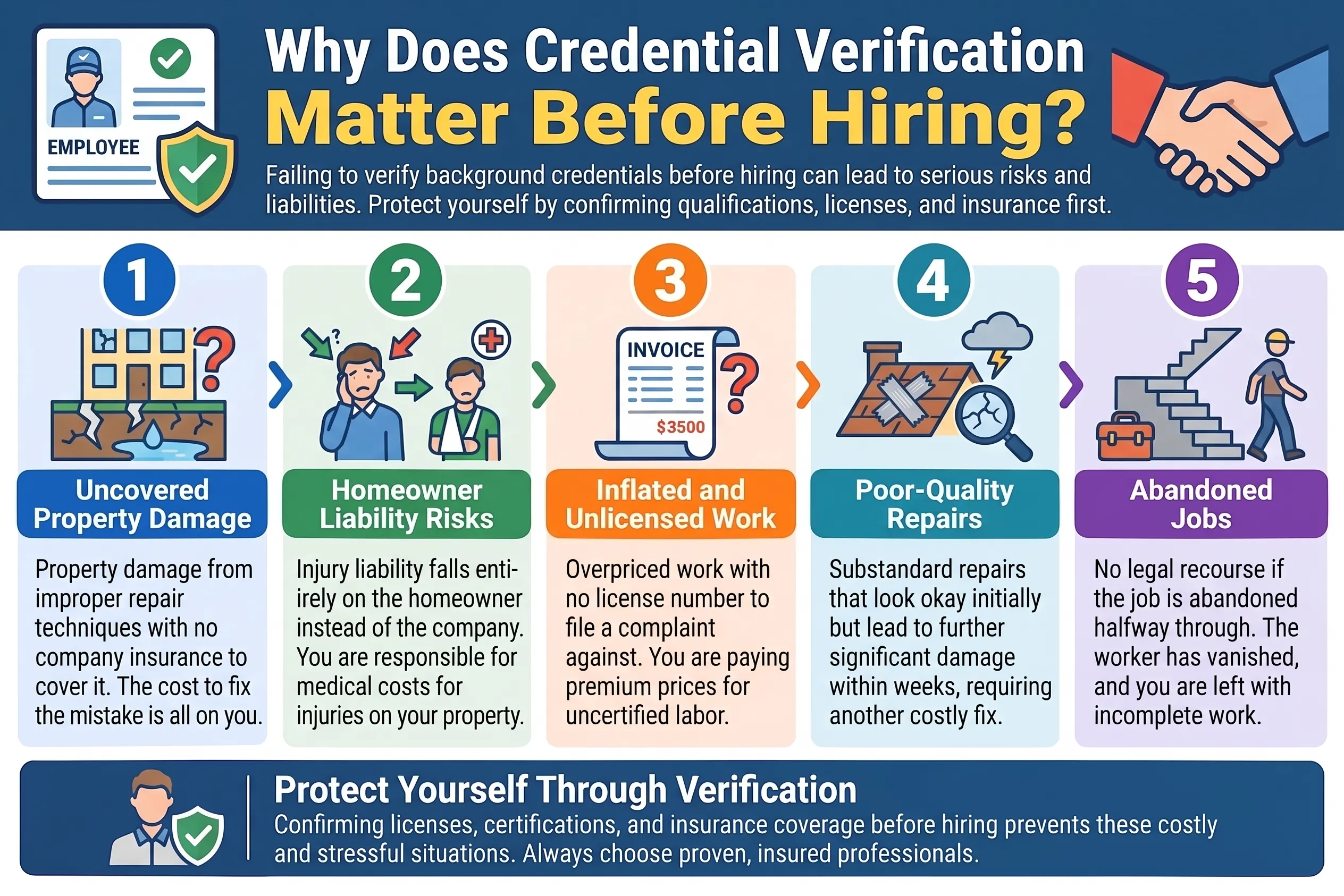
Unchecked credential checks can turn a routine repair call into a gamble with the home’s safety and the homeowner’s wallet.
These outcomes are common when a technician’s credentials go unchecked:
- Property damage from improper repair techniques with no insurance to cover it.
- Injury liability falling entirely on the homeowner instead of the company.
- Overpriced work with no license number to file a complaint against.
- Poor quality repairs that lead to further damage within weeks.
- No legal recourse if the job is abandoned halfway through.
Confirming credentials before scheduling a garage door repair filters out most unqualified operators before they ever reach the driveway.
What Counts as a Valid Technician Credential?
Valid technician credentials should always show up clearly as documented proof, never as a spoken claim made in passing conversation.
Category | What a Verified Technician Shows | What an Unverified Technician Avoids |
License | An active state license number, checkable online | Refusing to provide a license number at all |
Insurance | A current certificate of liability insurance | Vague claims of coverage with no documentation |
Bonding | Proof of bonding against theft or incomplete work | No mention of bonding unless directly asked |
Certification | Manufacturer or institute of door dealer education training | No certifications, only general experience claims |
Business Address | A verifiable physical office or showroom | A P.O. box or no address listed anywhere |
To understand what this documentation includes, read our guide on Documents a Legitimate Garage Door Technician Should Provide, which breaks down exactly what a homeowner should request before any work begins.
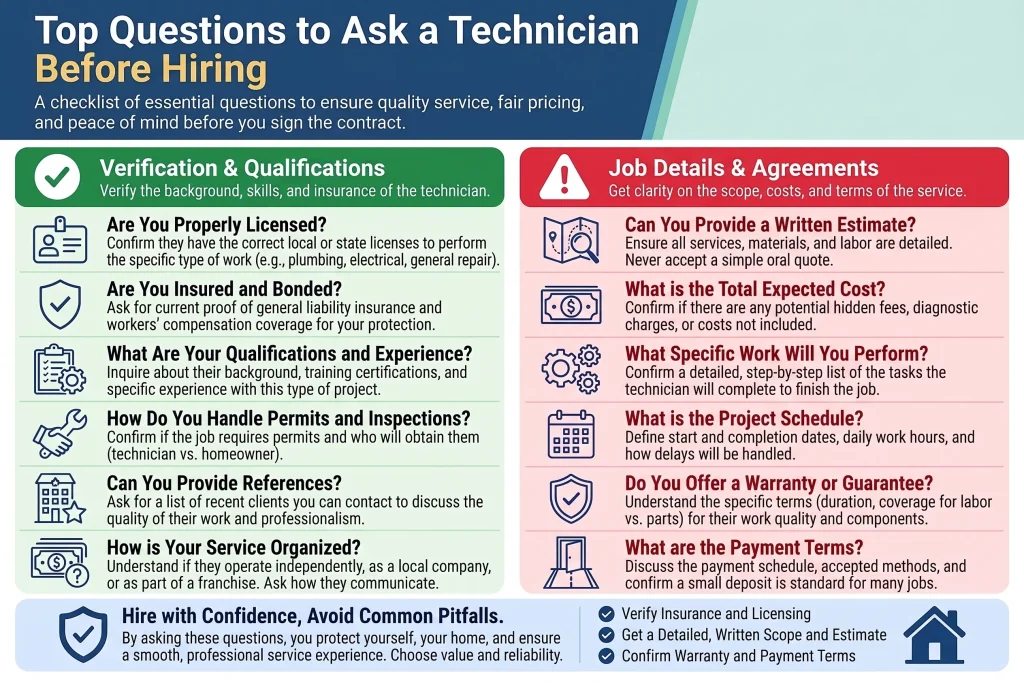
Questions to Ask a Technician Before Hiring
Direct questions asked before scheduling reveal more about a company’s legitimacy than anything printed on its website.
Ask these questions before confirming any appointment:
- Can you provide your state license number for verification?
- Is your liability insurance current, and can I see proof?
- Are your technicians certified by the manufacturer or an accredited body?
- Do you provide a written, itemized estimate before work starts?
- What warranty do you offer on both parts and labor?
To walk through this vetting conversation in full detail, read our guide on Questions to Ask Before Hiring a Garage Door Technician, which covers exactly what to ask and how to interpret the answers you receive.
How to Confirm a Technician’s Credentials
Verify Licensing and Registration
License numbers offer the fastest way to confirm whether a garage door technician is legally permitted to work in Missouri.
Confirm these details when checking a license:
- Look up the contractor license number through the state database.
- Confirm the license is active with no current suspensions.
- Verify the license name matches the company name exactly.
- Check the license category covers garage door work specifically.
- Note the license expiration date before scheduling service.
License checks alone will not identify every dishonest operator, but they remove those counting on homeowners never checking.
Validate Insurance and Bonding
Insurance protects the home if something goes wrong, while bonding protects the homeowner against theft or incomplete work.
Request proof of these protections before any appointment:
- Ask for proof of general liability insurance coverage.
- Request proof of workers’ compensation coverage for on-site injuries.
- Verify bonding coverage against theft or incomplete work.
- Call the insurance provider directly to confirm the policy is active.
- Confirm the coverage amount meets state minimum requirements.
Calling the insurance provider directly closes the one loophole a forged certificate cannot survive, especially on higher-risk jobs such as garage door installation.
Review Industry Certifications
Certifications from recognized industry bodies confirm a technician has passed standardized training instead of learning entirely on the job.
Look for these certification markers during verification:
- Check the technician’s paperwork for current IDA certification standards.
- Confirm certified technicians have passed relevant safety exams.
- Look for manufacturer certifications from brands like LiftMaster or Clopay.
- Ask how recently the certification was renewed or updated.
- Verify the certification applies specifically to residential work.
Missing certification doesn’t automatically signal dishonesty, but it removes another layer of verification a homeowner can rely on.
Evaluate Business Legitimacy
A company’s physical presence, vehicle branding, and staff identification say as much about legitimacy as any paperwork.
Check these signs of business legitimacy in person:
- Verify a real physical office address, not just a P.O. box.
- Confirm the technician arrives in a marked company vehicle.
- Check that the technician wears company apparel and carries ID.
- Review Better Business Bureau ratings and unresolved complaints.
- Search the company name alongside the word “reviews” independently.
Confirming these details before the appointment keeps the homeowner from being caught off guard once a technician has already arrived.
Demand Clear Estimates and Warranties
Written estimates protect homeowners from unexpected price changes and disputes once the job is already underway.
Request these items in writing before work begins:
- Get a written quote before any work is authorized.
- Review warranty details covering both parts and labor.
- Confirm the warranty length in months or years specifically.
- Avoid paying a large deposit before work has started.
- Ask what happens if the same issue returns within weeks.
Putting estimates and warranties in writing turns a verbal promise into something legally enforceable if the repair doesn’t hold up over time.
Where Can a Technician’s Claims Be Independently Verified?
Independent verification means checking a claim carefully through a source the technician cannot directly control or influence.
Check these independent sources before confirming any hire:
- Search the overcharging warning signs listed by manufacturer buying guides.
- Look up the license number directly on the state licensing website.
- Call the insurance carrier listed on the certificate to confirm coverage.
- Cross-reference reviews across two or more independent platforms.
- Search the business address on a mapping service to confirm it exists.
Independent checks take only a few extra minutes but consistently reveal the difference between real garage door technicians and operators hoping no one looks closer.
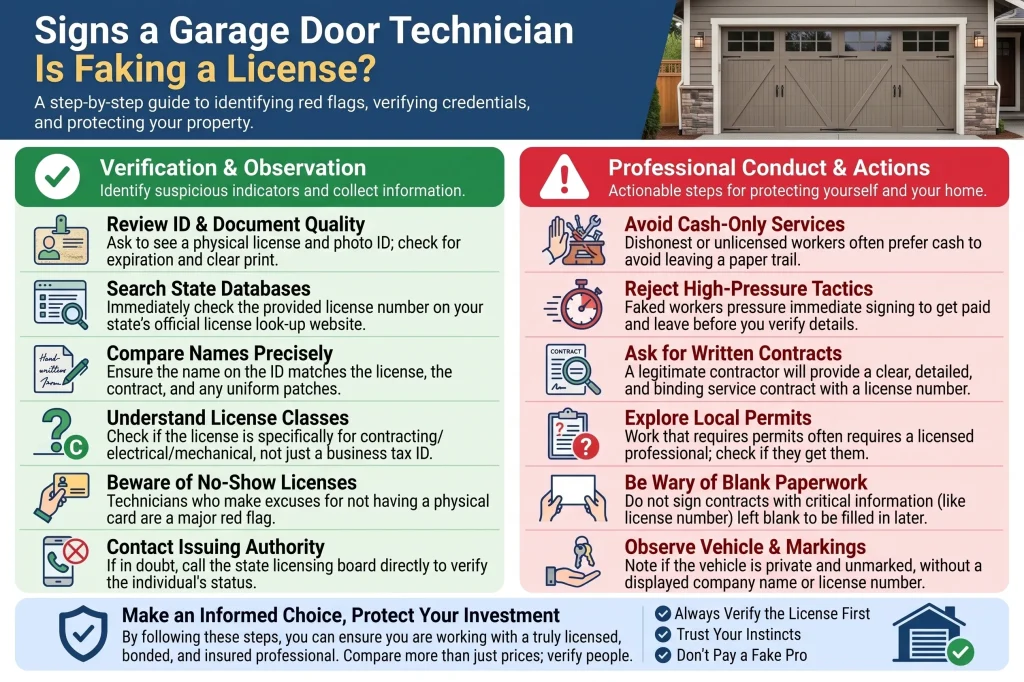
Red Flags That Signal Missing or Fake Credentials
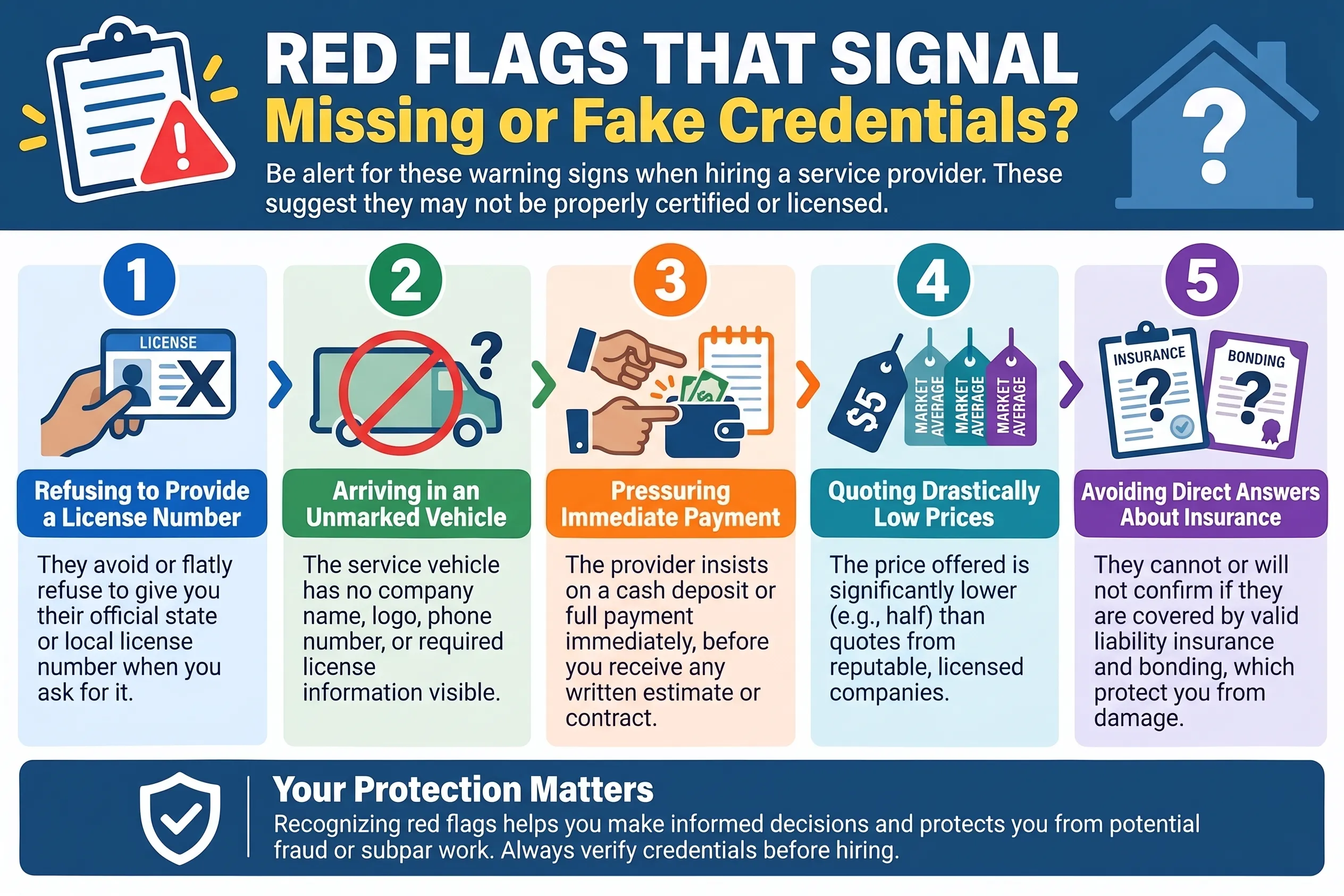
Fake credentials rarely hold up under scrutiny, especially during emergency garage door repair situations when homeowners feel rushed.
Watch for these signs during any interaction:
- Refusing to provide a license number when asked directly.
- Arriving in an unmarked vehicle with no company branding.
- Pressuring immediate payment before any written estimate is given.
- Quoting prices far below what comparable companies charge.
- Avoiding direct answers about insurance or bonding coverage.
To recognize these warning signs in the moment, read our guide on Signs a Garage Door Technician Is Faking a License, which walks through the specific behaviors that reveal a fake license before any money changes hands.
Verified Credentials Are Non-Negotiable Before Any Hire
Confirming a technician’s credentials before hiring comes down to a handful of checks that take minutes but prevent damage that can take months to undo. License databases, direct insurance calls, and independent reviews exist so homeowners don’t have to rely on trust alone.
Anytime Garage Doors earns repeat business from Kansas City homeowners by sending only technicians whose license, insurance, and credentials hold up to scrutiny before a single appointment is scheduled. Contact us or give us a call today to schedule service with a team ready to answer every credential question upfront.