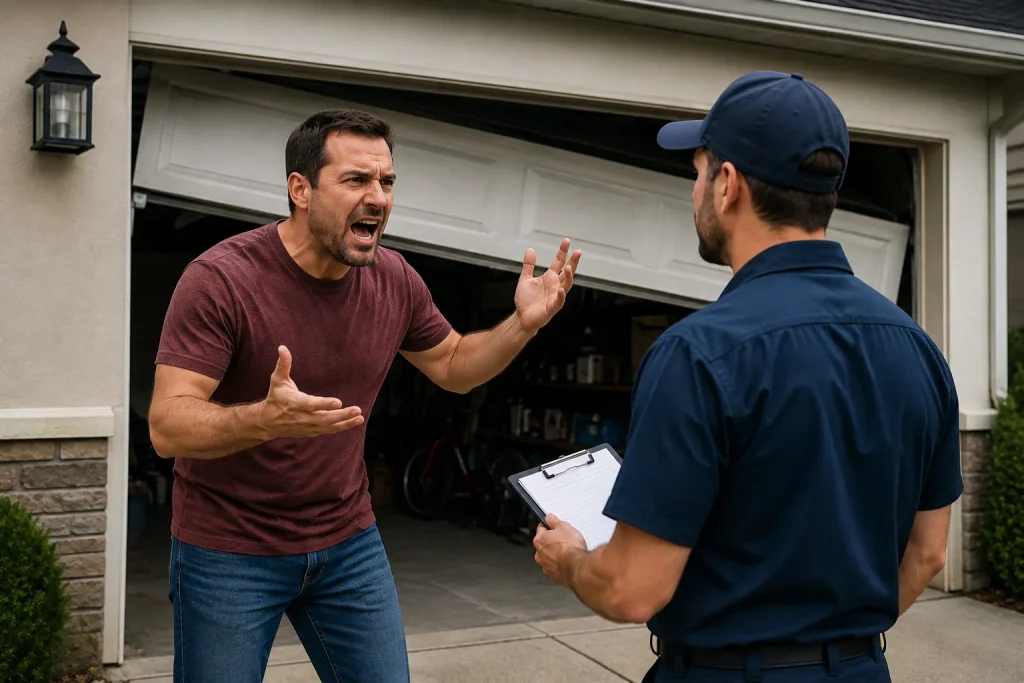
A garage door making strange noises, responding sluggishly, or stalling is often overdue for maintenance, and the same holds true for uneven travel or a heavy manual lift. Visible wear, gaps in the track, and cracked weather seals point to the same conclusion, even when the door still opens and closes normally.
Noticing these signs early opens a real window to schedule routine garage door maintenance before a small issue develops into a genuine safety or performance problem. Left unaddressed for too long, that window closes quickly, since every closing counts toward how much longer the door holds up.
Key Takeaways
- Strange noises like grinding or popping usually mean parts are dry or worn
- Sluggish response or stalling often signals a motor, sensor, or track problem
- Uneven travel and a heavy manual lift both point to spring or balance issues
- Visible wear on cables, springs, or hinges signals a real safety risk
- Track gaps and worn weather seals both allow bigger problems to develop unnoticed
Signs Garage Door Maintenance Has Fallen Behind Schedule
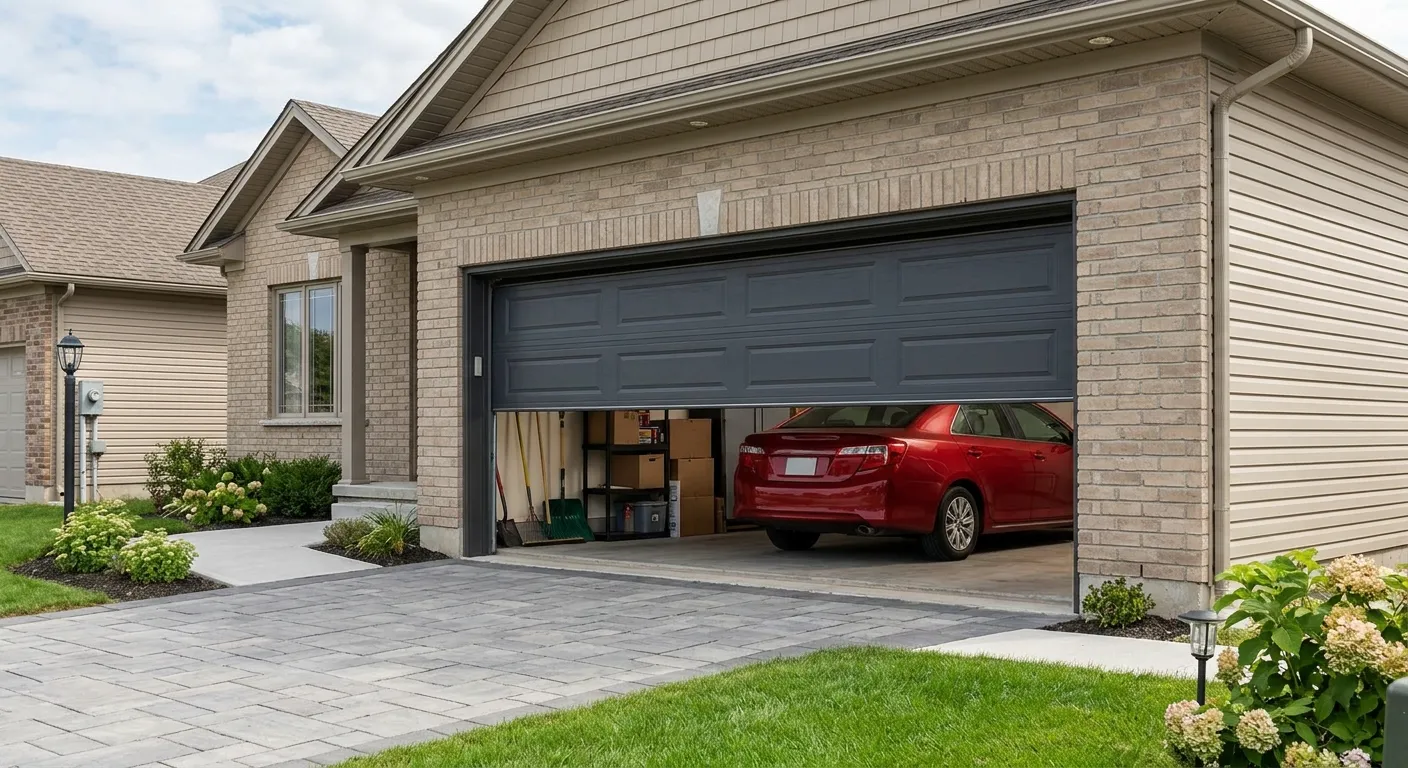
A garage door usually shows more than one of these signs at once once regular upkeep has been skipped for too long.
Sign | What It Looks or Sounds Like | What It Usually Means |
Strange Noises | Grinding, scraping, squeaking, or popping | Parts are dry, worn, or loose |
Sluggish Response | Delay after pressing the button | Motor or opener is straining |
Stalling or Reversing | Door stops or reverses before closing | Sensor or track issue |
Uneven Travel | Jerky, shaking, or crooked movement | Door is out of balance |
Heavy Manual Lift | Door feels heavy when lifted by hand | Lost spring tension |
Visible Wear | Rust, fraying, or cracked hinges | High safety risk |
Track Gaps | Bent, loose, or misaligned rails | Rolling is no longer smooth |
Bad Weather Seals | Cracked or gapped rubber seals | Energy loss and debris entry |
Each sign below is explained in more detail, including what it typically looks or sounds like in practice.
Strange Noises
A garage door in good working order should open and close quietly, producing only a low, steady hum from the motor as it moves.
A noise like this usually falls into one of these categories:
- A sharp grinding sound during opening or closing
- Repeated popping near the torsion springs
- A high-pitched squeal coming from the rollers
- Scraping noises as the door moves along the track
- Clicking or rattling from loose hardware on the frame
Persistent noise beyond a single cycle is one of the clearest signals that a garage door cable repair or similar service is overdue.
Sluggish Response
A well-maintained opener responds within a second or two of a button press and moves the door at a steady, consistent speed.
The delay tends to look like one of these:
- A noticeable pause between pressing the remote and the door starting to move
- A full open or close cycle that takes longer than it used to
- The motor sounding like it’s working harder than normal
- The door moving in small jerks instead of one smooth motion
- A remote that needs to be pressed more than once to get a response
To understand how a missed maintenance schedule leads to this kind of strain, read our guide on How Often Do Garage Doors Need Maintenance, which lays out the exact intervals that prevent it.
Stalling or Reversing
A door that stalls partway or reverses before reaching the ground is reacting to something it senses as an obstruction, even when nothing is there.
A few patterns point directly to this problem:
- The door stopping a few inches short of fully closing
- A sudden reversal partway through the closing cycle
- The door appearing to hesitate before continuing its motion
- Repeated attempts needed before the door completes a full cycle
- The safety sensors’ lights flickering or changing color during the cycle
This kind of stalling behavior usually points to a sensor alignment or track issue that worsens with continued use.
Uneven Travel
A door moving correctly should travel in one smooth, level motion from start to finish without any visible shaking.
Watch for movement that resembles any of these:
- One side of the door appearing to lag behind the other
- A visible shake or wobble partway through the cycle
- The door looking crooked when partially open
- A jerky, stop-start motion instead of a continuous glide
- Rattling that gets louder as the door travels further
Uneven travel like this rarely improves on its own and tends to get more pronounced with continued use.
Heavy Manual Lift
A properly balanced door should lift smoothly with one hand and stay in place at any point once the opener is disconnected.
The extra weight tends to reveal itself through:
- The door feeling unusually heavy when lifted manually
- The door dropping back down instead of staying in place
- Noticeably more effort needed compared to previous months
- The opener straining audibly to compensate for the extra weight
- The door closing faster than it opens
A heavy manual lift like this is one of the clearest signs that a garage door spring installation or adjustment has become overdue.
Visible Wear
Visible wear on roller bearings is often the easiest sign to catch during a simple walk-around inspection of the door and its hardware.
A quick inspection often turns up signs like these:
- Rust spots forming on the springs or track hardware
- Frayed strands visible along the lifting cables
- Cracks forming along the hinges or corner brackets
- Chipped or peeling paint exposing bare metal underneath
- Bent or dented sections along the door panels
To see how these visible signs can develop into larger problems if left unaddressed, read our guide on Problems Caused by Skipping Garage Door Maintenance, which walks through each consequence in detail.
Track Gaps
Tracks should sit flush against their mounting brackets at all times, with no visible separation from the wall, frame, or surrounding hardware.
These red flags along the track are easy to miss:
- Visible daylight between the track and its mounting brackets
- Rollers popping slightly out of the track during movement
- A track that looks bent or bowed along its length
- Loose bolts allowing the track to shift when the door moves
- Debris or rust buildup inside the track channel
A garage door track repair is typically the fastest, safest way to resolve gaps like these before they cause the door to derail.
Bad Weather Seals
Weather seals should sit flush against both the ground and the door frame, with no visible gaps, cracking, or separation anywhere along the edge.
A worn seal typically presents in one of these forms:
- Daylight visible under the closed door along the bottom seal
- Cracked or brittle rubber along the door’s edges
- Drafts felt near the door on windy days
- Water pooling near the base after rain
- Pests or debris entering through small gaps in the seal
Worn seals like these rarely fail all at once, but they tend to get noticeably worse with each passing season, especially once the material starts to crack.
What to Do After Noticing These Signs
Noticing one or more of these minor issues is the first step, but what happens next determines whether the fix stays simple or turns into a bigger repair.
Homeowners who spot these signs should take the following steps:
- Note which signs are present and how long they have been happening
- Avoid forcing the door if it stalls, reverses, or feels unusually heavy
- Schedule an inspection before attempting any spring or cable adjustments
- Keep a record of noises or issues to describe to a technician
- Address smaller signs quickly before they combine into a larger problem
To learn how to handle each maintenance task correctly going forward, read our guide on How to Properly Maintain a Garage Door, which walks through the proper technique for every task on the schedule.
Address These Signs Before They Become Bigger Problems
A garage door showing several of these signs at once is rarely a coincidence, and waiting to address them tends to increase both the eventual cost and the safety risk involved. Addressing the earliest signs almost always protects the life of your door more than waiting for a full breakdown.
Anytime Garage Doors helps homeowners throughout Kansas City, MO, identify these signs early and address them before they develop into larger, far more expensive repairs down the road. Contact us or give us a call today to schedule an inspection and get ahead of the problem before it grows.