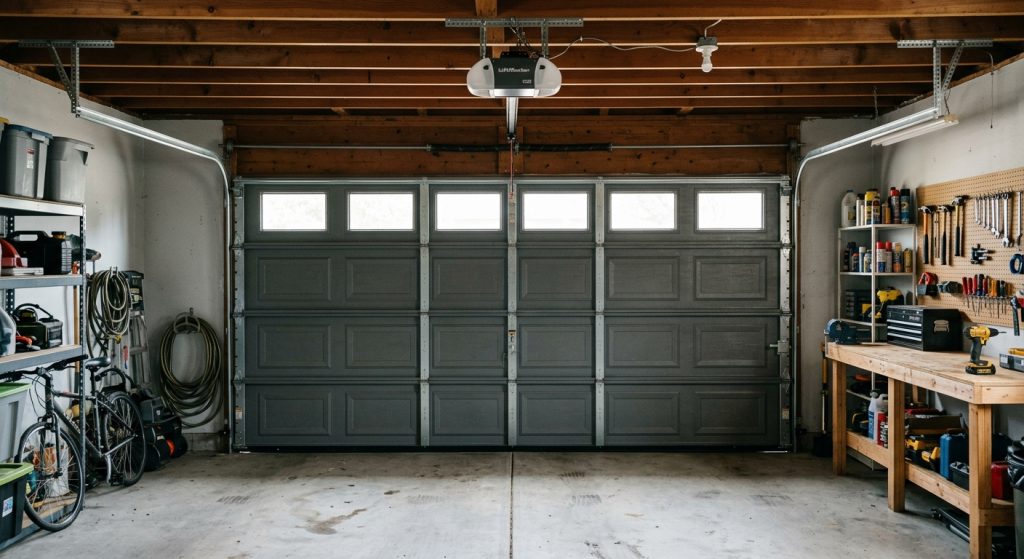
Neglected garage door maintenance leads to worn springs, frayed cables, dry rollers, and opener burnout over time. These mechanical failures rarely stay isolated, since they often trigger safety sensor failure, a broken auto-reverse feature, and noticeably higher energy bills from worn seals.
An overdue garage door maintenance schedule allows small mechanical issues to spread into these larger, costlier failures across the entire system rather than staying contained to one part. Identifying and resolving them early keeps repair costs far lower and the door meaningfully safer to operate.
Key Takeaways
- Torsion springs and frayed cables are among the most common results of skipped maintenance
- Dry rollers and hinges create friction that eventually leads to opener burnout
- Safety features like auto-reverse and sensors both carry real injury risk when neglected
- Higher energy bills often trace back to worn seals that went unnoticed
- A proactive approach keeps repair costs far lower than waiting for failure
Problems That Develop When Maintenance Is Skipped
A single missed maintenance interval is usually enough to set off a chain of mechanical and safety issues across the entire door system.
The table below breaks down what typically happens and why:
|
Problem |
What Happens |
Why It Happens |
|
Worn Springs |
Springs lose tension or snap suddenly |
Age and lack of inspection |
|
Frayed Cables |
Cables break under pressure |
Rust or wear left unaddressed |
|
Dry Rollers and Hinges |
Metal-on-metal friction and grinding |
Missed lubrication intervals |
|
Opener Burnout |
Motor strains and gears strip |
Door out of balance |
|
Safety Sensor Failure |
Sensors stop detecting obstructions |
Dirt or misalignment |
|
Broken Auto-Reverse |
Door fails to reverse on contact |
Worn or failed safety mechanism |
|
Higher Energy Bills |
Conditioned air escapes the garage |
Cracked or dry weatherstripping |
The sections below explain what actually causes each problem and what it typically looks like once it fully develops.
Mechanical Problems From Skipped Maintenance
Worn Springs
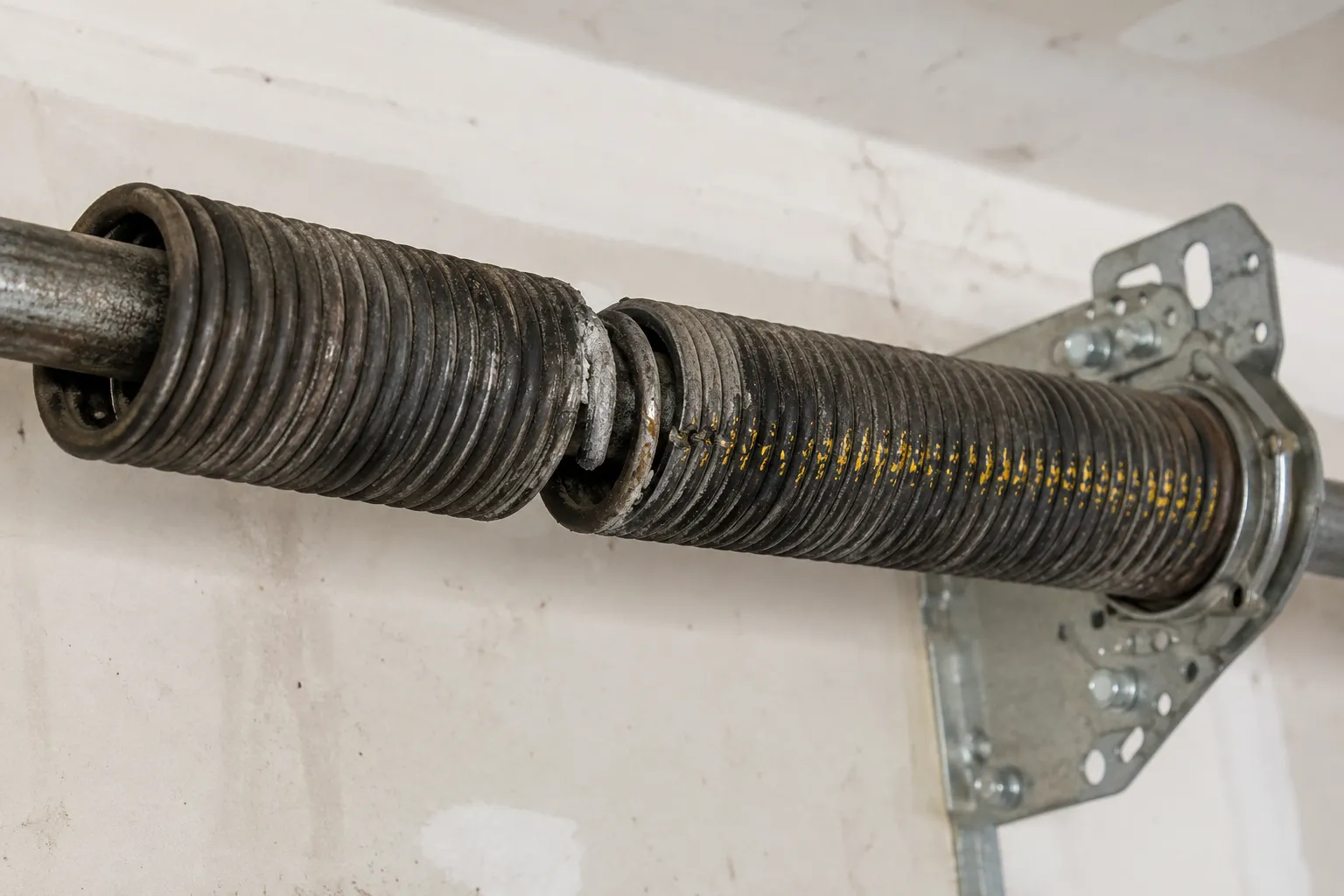
Door springs carry the full weight of the door, and unchecked wear eventually causes them to lose tension or fail outright.
This problem typically develops in one of the following ways:
- Gradual tension loss that makes the door harder to lift over time
- A sudden snap during regular use, with no prior warning
- Uneven wear between the two side springs on a torsion system
- Visible stretching or deformation along the spring’s coils
- Rust weakening the metal at the spring’s mounting points
To understand the right maintenance frequency for spring inspections that prevent this exact failure, read our guide on How Often Do Garage Doors Need Maintenance, which lays out the full service schedule.
Frayed Cables
Steel lifting cables work under constant movement and tension, and fraying develops quietly until the cable finally gives way under pressure.
This problem usually shows up in one of the following ways:
- Individual strands separating from the main cable body
- Rust forming along the cable near the drum or bottom bracket
- The cable slipping slightly off its designated groove
- Visible kinks or bends weakening a specific section
- A full snap that leaves the door crooked or completely stuck
A garage door cable repair typically resolves this problem before it leaves the door stuck or unsafe to operate.
Dry Rollers and Hinges
Roller bearings and hinges depend on a thin layer of lubricant for smooth operation, and once that layer wears away, metal grinds directly against metal.
This problem generally develops through one of the following:
- Grinding or squealing noises as the rollers move along the track
- Hinges stiffening and resisting the door’s normal folding motion
- Wheel bearings seizing up inside the roller housing
- Increased resistance that makes the opener work harder than normal
- Visible rust forming on hinges left dry for extended periods
A garage door roller repair becomes necessary once dry rollers progress far enough to affect the door’s overall movement.
Opener Burnout
Garage door openers are built to move a balanced door, and compensating for worn springs or rollers wears out its internal components far faster than normal.
This problem typically develops in one of the following ways:
- Internal gears stripping from repeated overexertion
- The motor overheating during ordinary use
- A burning smell coming from the opener unit during operation
- The opener stalling partway through a cycle
- Complete motor failure after months of added strain
Opener burnout like this often costs more to repair than the mechanical issue that caused it in the first place.
Safety and Efficiency Risks From Skipped Maintenance
Safety Sensor Failure
Photo-eye safety sensors are designed to stop the door the moment they detect an obstruction, and dirt or misalignment can quietly disable that protection.
This problem often develops in one of the following ways:
- Dust or spiderwebs blocking the sensor’s line of sight
- Sensors gradually drifting out of alignment over time
- Wiring becoming loose or corroded at the connection point
- One sensor failing while the other continues to appear functional
- The door closing without pausing, even with an object underneath
To see the specific warning signs that point to this exact failure, read our guide on Signs of Overdue Garage Door Maintenance, which explains how to spot sensor issues before they lead to a real safety hazard.
Broken Auto-Reverse
The auto-reverse feature is meant to stop and reverse the door the instant it senses resistance, and mechanical wear can disable that response entirely.
This problem typically develops through one of the following:
- A worn sensor mechanism that no longer triggers the reversal
- Delayed reversal that engages after contact instead of before
- A door that continues closing fully regardless of an obstruction
- Inconsistent reversal that works sometimes and fails other times
- A mechanism that reverses too slowly to prevent real contact
A door with this problem creates a real crushing hazard and should be treated as a primary concern, not routine wear.
Higher Energy Bills
Weatherstripping seals the garage against outside air, and once it cracks or dries out, conditioned air escapes far more easily than most homeowners realize.
This problem usually shows up in one of the following ways:
- Cracked or brittle seals along the door’s bottom edge
- Visible gaps between the door panels and the frame
- A noticeable draft felt near the door on cold or windy days
- Pests entering through small gaps in the worn seal
- A steady rise in energy bills tied to energy loss from the attached garage space
Replacing worn seals is one of the simplest fixes on this list, and it often makes the most noticeable difference in energy efficiency and comfort.
How to Avoid These Problems Going Forward
Preventing worn springs, dry rollers, sensor failure, and the other risks covered above mostly comes down to consistent inspection, lubrication, and timely repair.
Homeowners can avoid these outcomes by taking the following steps:
- Following a garage door maintenance schedule with consistent lubrication and inspection
- Addressing unusual noises or other early warning signs before they progress further
- Scheduling annual service with a professional at least once a year
- Testing safety sensors and auto-reverse function through regular inspections
- Replacing worn weatherstripping and tightening any loose bolts before they fully fail
To walk through the exact steps involved in doing this correctly and consistently, read our guide on How to Properly Maintain a Garage Door, which breaks down the full process interval by interval, along with the tools each one requires.
Prevent These Risks Before They Become Costly Repairs
Worn springs, dry rollers, and failing safety sensors all start as minor, low-cost fixes before growing into full system failures that affect the entire door. A consistent maintenance schedule remains the most reliable way to prevent all seven of these outcomes from developing at once.
Anytime Garage Doors resolves these problems early for homeowners throughout Kansas City, MO, through routine service and timely repair before they turn into costly emergencies. Contact us or give us a call today to schedule a visit and protect the door from unnecessary wear.