Motor strength in a garage door opener is measured in horsepower, and the right rating depends almost entirely on the actual weight of the door it lifts every day. Four common ratings cover the full range of residential situations, from light single-car doors to oversized custom builds requiring far more lifting power.
Choosing horsepower without calculating actual door weight often leads to either a straining motor or an unnecessary expense on power you don’t need. This piece breaks down each horsepower tier by lift capacity and typical use, plus the other factors worth weighing before buying.
Key Takeaways
- Horsepower ratings range from 1/3 HP for light doors to 1 HP or more for oversized ones.
- Lift capacity, not door size alone, determines the correct horsepower rating.
- Underpowered motors wear out faster and strain harder with daily use.
- Oversized horsepower rarely causes problems beyond a higher upfront cost.
- Modern DC-powered units often run more smoothly than older AC motors.
Horsepower and Lift Capacity Breakdown
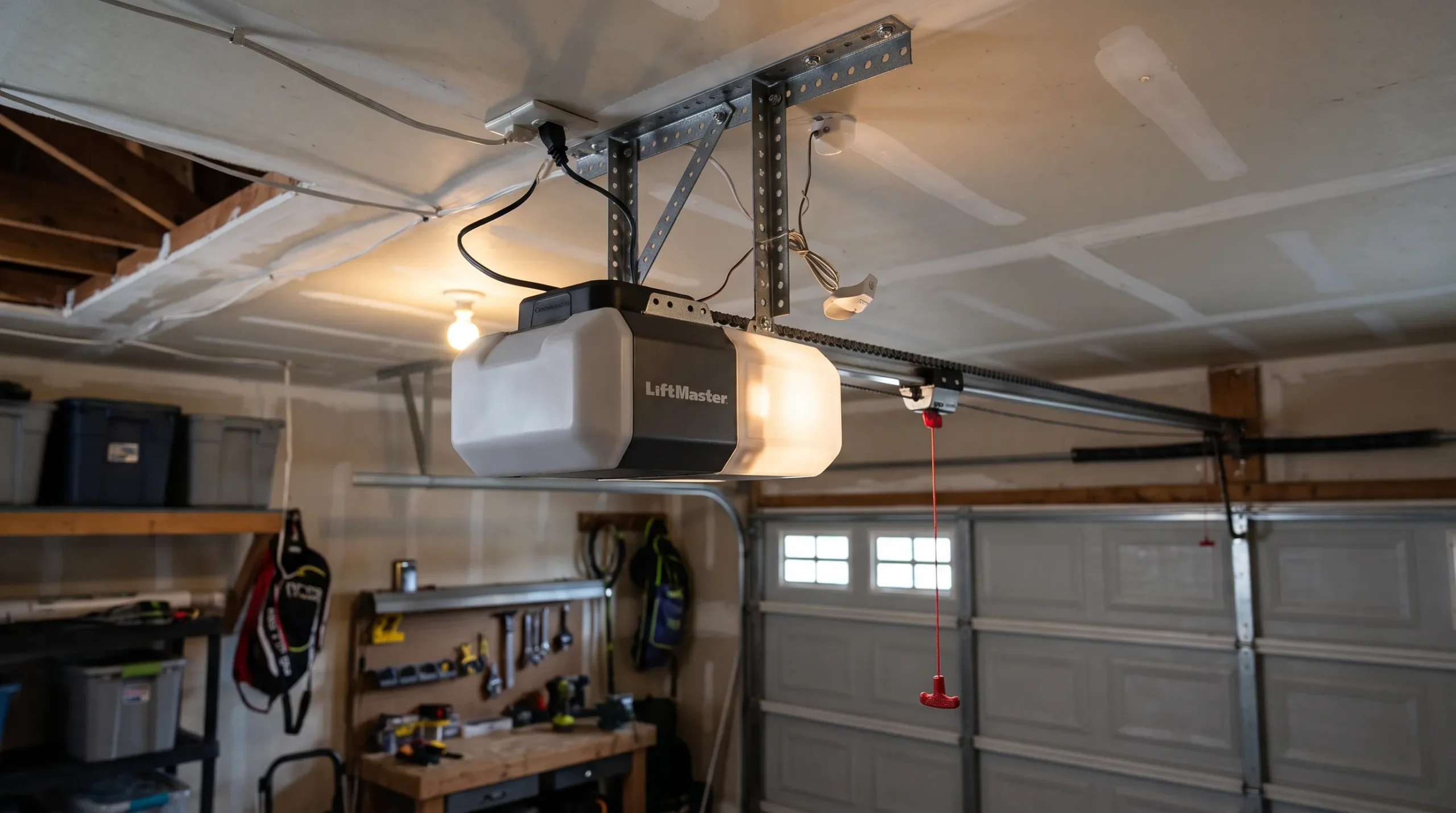
Residential garage doors span a wide weight range, and horsepower tiers exist specifically to match motor strength to that range accurately.
Horsepower | Lift Capacity | Best Use |
1/3 HP | Up to roughly 150 lbs | Lightweight single-car doors |
1/2 HP | Up to roughly 350 lbs | Standard single or double doors |
3/4 HP | Up to roughly 600 lbs | Heavier sectional or insulated doors |
1 HP and DC equivalents | 750 lbs and above | Oversized or custom heavy doors |
Weight, not appearance or door style, ultimately decides which specific tier avoids a premature garage door repair call later on.
1/3 HP
Lightweight doors rely on the smallest common horsepower rating available on the market today, though the tier has become less common recently.
Consider these details before choosing this entry-level tier:
- Lift capacity tops out around 150 pounds for evenly distributed weight.
- Best suited to single-car steel, aluminum, or fiberglass doors.
- Wears out faster than higher-rated motors under daily stress.
- Less commonly manufactured today than in previous decades.
- Lower upfront cost than every other horsepower tier available.
To confirm whether this tier actually matches a specific door’s measured weight, read our guide on How to Choose a Garage Door Opener, which walks through the exact measurement steps every opener decision should start with.
1/2 HP
Standard residential doors overwhelmingly land in this middle tier, making it the most common horsepower rating installed today.
Weigh these details before finalizing this middle tier:
- Lift capacity reaches approximately 350 pounds under normal conditions.
- Fits standard single or double doors between eight and twelve feet wide.
- Works well with aluminum, steel, or composite door materials.
- Remains the most widely sold residential horsepower rating available.
- Balances cost and performance for the average homeowner’s needs.
Popularity alone does not guarantee a correct fit, so confirming the door weight before any garage door installation still matters most.
3/4 HP
Heavier doors made of insulated steel or solid wood construction push well past what a standard 1/2 HP motor comfortably handles.
Review these details before selecting a 3/4 HP unit:
- Lift capacity extends to approximately 600 pounds.
- Suited to large double-car doors and insulated sectional doors.
- Handles solid wood doors better than lower horsepower tiers.
- Produces longer motor life by reducing daily strain.
- Costs more upfront than the 1/2 HP tier.
To understand which drive system best handles this lifting demand, read our guide on Drive Types to Consider When Choosing a Garage Door Opener, which breaks down how chain, belt, screw, and direct drive systems compare.
1 HP and DC Equivalents
Oversized and custom doors push horsepower demands into the top tier, where 1 HP motors and modern DC equivalents take over.
Examine these details before choosing this highest tier:
- Lift capacity starts at 750 pounds and climbs from there.
- Suited to oversized double-car doors and carriage-house style doors.
- Handles heavily insulated or wind-load-rated doors reliably.
- DC-powered units often rate equivalent to 1-1/4 or 1-1/2 HP.
- Delivers smoother, quieter operation than most older AC motors.
To weigh whether the smart technology often bundled with these units justifies the cost, read our guide on Smart Features Worth Considering in a Garage Door Opener, which covers which additions genuinely improve daily use.
Key Factors to Consider in Choosing the Right Horsepower
Horsepower alone does not guarantee smooth operation without a few other factors working in the opener’s favor.
Weigh these additional factors before finalizing a horsepower choice:
- Spring balance, since a poorly balanced door strains any motor, regardless of rating, and often triggers garage door maintenance visits.
- Track alignment, which affects how freely the door moves during each cycle.
- Door age, since older doors often carry more accumulated weight from repairs.
- Climate conditions, since cold weather can temporarily increase resistance during operation.
- Usage frequency, since high-cycle households benefit from slightly higher-rated motors.
Horsepower ratings are a good starting point, but not the only factor in whether an opener performs reliably for years.
Horsepower Should Match the Door and the Budget
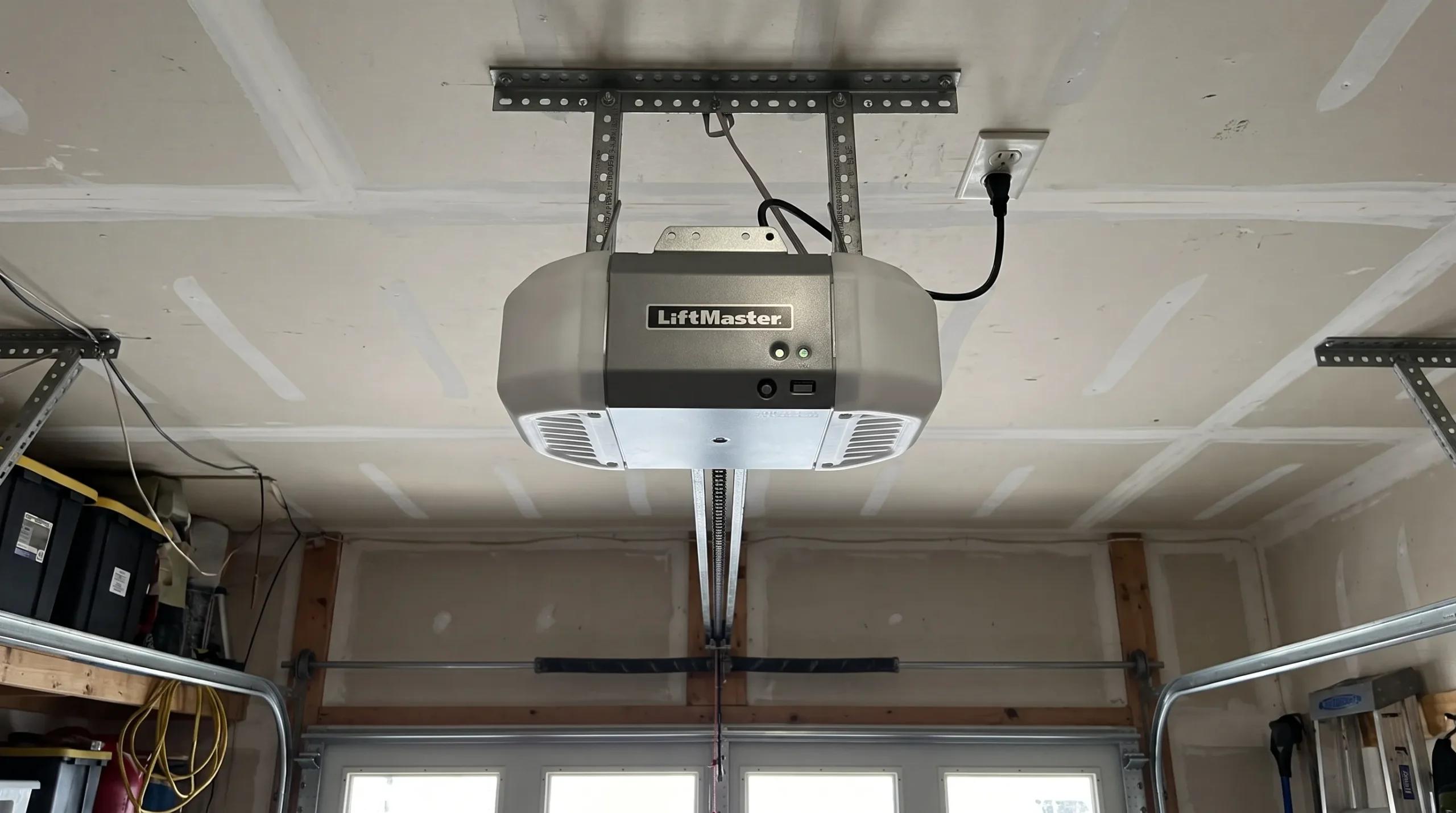
Choosing horsepower comes down to one central fact: the number printed on the box only matters if it genuinely matches what the door actually weighs. A 1/3 HP motor struggling under a solid wood door fails just as predictably as an oversized motor overspending on a light aluminum one.
Anytime Garage Doors calculates the correct horsepower rating for every Kansas City homeowner before ever recommending any specific opener model, brand, or price point. Contact us or give us a call today for a straight, honest answer on which rating fits your specific door and household.